Cinematographer
Béla Thinsz |
|
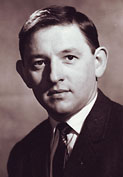
Béla Thinsz 1932 - 1982 was born in Budapest and lived with his parents and a younger brother on the Pest side of town where his parents, had bought a coffee-house - the "Thincz Béla Cukrászda". Both parents were confectionists and Béla was taught that too. The coffee-house remained in the family until 1950, when it was assign to the Hungarian State. Even at a young age Béla started to take photos and to make short films. When the Basilika was burning in 1947. Politics forced Béla to learn to become a cabinet-maker and he worked on several buildings in Budapest putting in new window-arches. He graduated in 1950 and then went to the Színház és Filmmüvészeti Föiskola and a master class with teachers such as Illés György and Fábri Zoltán. During the Revolution of 1956 he took many photographs, some of them just in front of his door-way and one day out shooting pictures, leaning to a lamp-post, he heard someone calling his name: in the top of the lamp-post he found his class-mate future Academy Award Winner Vilmos Zsigmond who was filming on the same spot. When the Revolution was repelled, he decided to leave the country together with his wife and their 11 months old child. Avoiding parols and minefields they walked to Vienna where they managed to be picked up by a rescue bus to Sweden. He choose to go to Sweden because in the 1940's his pastor had studied theology in Sweden and talk about this peaceful and democratical country: "you can leave your bicycle unlocked at the train station, travel around the world and come back to find the bicycle where you left it". He later found out that his brother, Géza, who had had the same pastor, also had left for Sweden, where he became a poet even in Swedish. When coming to the gathering camp for Hungarians in the south of Sweden, he managed to get a job as an assistant in a photo-shop, even if not knowing any Swedish. In the beginning of the 1960's he got employed by SR ( Swedish Radio and Television) where he stayed until his death in 1982. He was working for the television section and constructed and worked in their animation studio and later he educated his successors. One of his animations, made in 1963, is still shown on TV during the summer season. He became cinematographer for TV both domestic and abroad productions in countries such as France, Tunisie, Holland, Belgium, England and Hungary. He had a private company for production of short films for e.g. The Royal Opera and The Theatre of Drottningholm. In 1968 he shot the Swedish part of a co-production with the Hungarain Television: A Régi Nyár. He got amnesty in 1969 and in February of that year he could return to Hungary for the first time in 13 years. He tried to return every second year to visit his aunt, a cousin with family and his friends but also to introduce his country, his town and his traditions to his new Swedish family. |
| Home | Biography | Photographs |